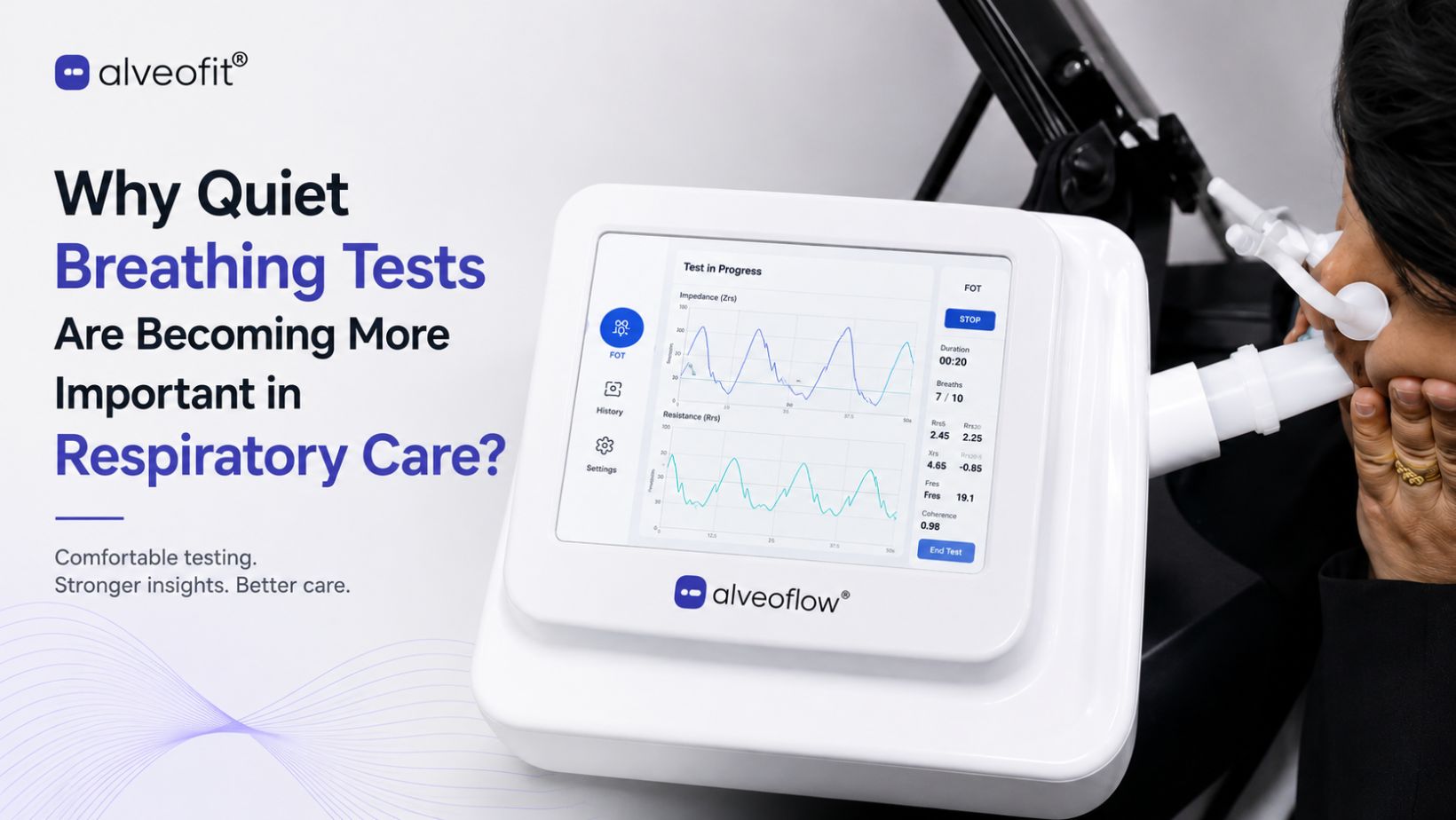
Respiratory care is steadily moving toward testing methods that feel more comfortable, accessible, and clinically insightful. Quiet breathing tests are becoming an important part of this shift.
Quiet breathing tests are changing how many clinics evaluate respiratory health, especially for patients who struggle with traditional effort-dependent testing. Many clinics now perform these assessments using an FOT testing device in India.
But what exactly are quiet breathing tests, and why are they becoming more important in respiratory care today? This article explores exactly that.
What Are Quiet Breathing Tests?
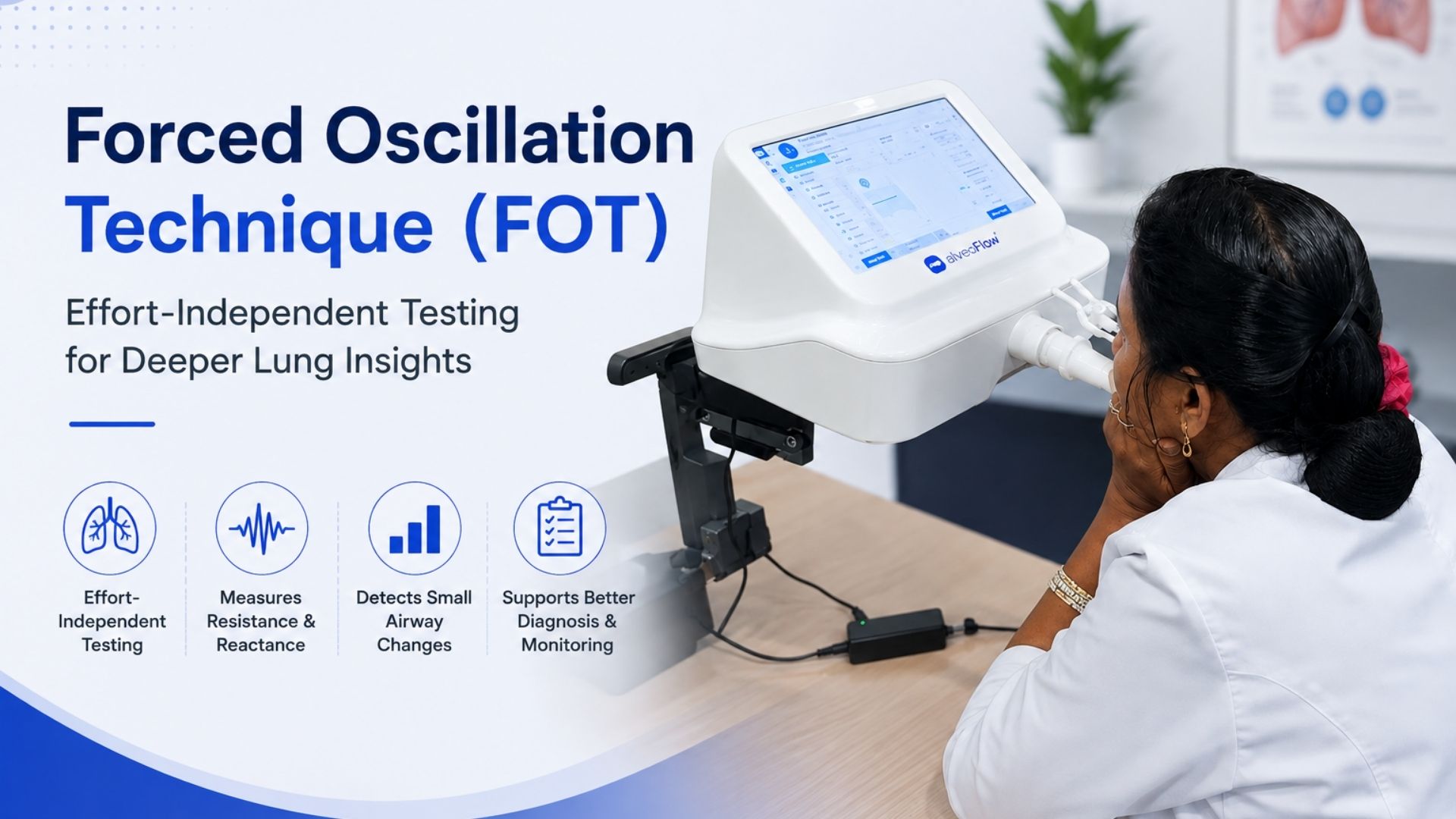
Quiet breathing tests are respiratory assessments performed while the patient breathes normally through a mouthpiece. There is no forceful exhalation, repeated coaching, or physically exhausting breathing effort involved during quiet breathing tests. Oscillometry is one of the most recognised technologies supporting this approach. This is most commonly performed using an FOT testing device in India.
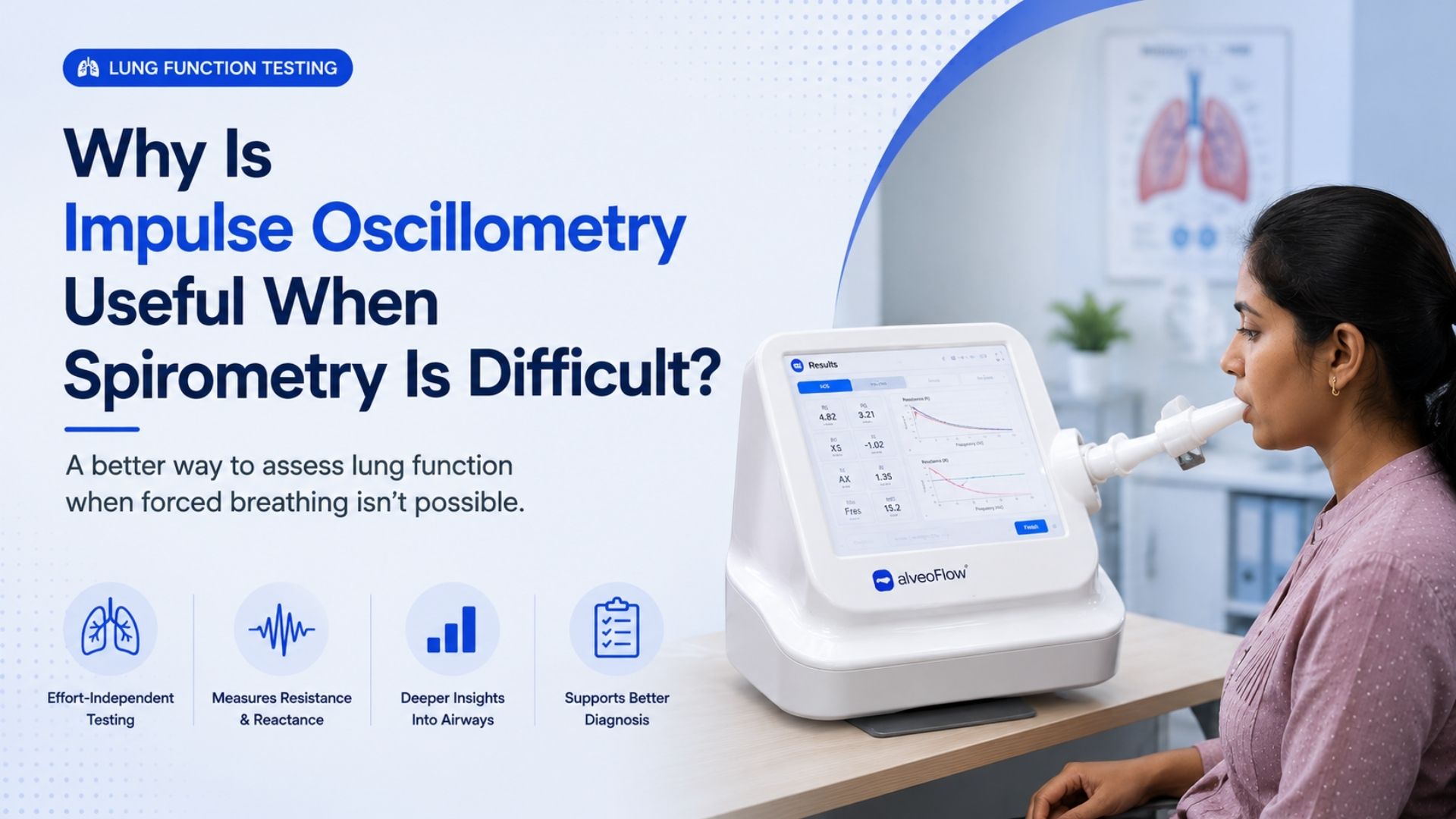
During this test, the FOT testing device sends gentle pressure oscillations into the airways while the patient continues breathing calmly. These oscillations help evaluate airway resistance and lung mechanics during natural breathing rather than forced performance. This is one of the biggest ways quiet breathing tests differ from traditional spirometry.
A conventional pulmonary function test machine is usually built around spirometry. Here, patients are asked to inhale deeply and then exhale forcefully into the device during guided testing. Quiet breathing tests, on the other hand, focus on how the lungs behave during natural, relaxed breathing.
This difference changes many things, including:
- How respiratory problems are identified
- How comfortably can patients be tested
- Which patients are able to complete the assessment successfully
Why Traditional Effort-Dependent Tests Do Not Work Equally Well for Every Patient?
Traditional respiratory tests often depend heavily on patient effort. Patients are expected to follow breathing instructions carefully. They need to inhale deeply, exhale forcefully, and sometimes repeat the process several times for accurate results. Many patients can perform this successfully, but the process does not feel equally manageable for everyone.
Forced breathing tests can become especially difficult when breathlessness, fatigue, age, or illness is already affecting breathing comfort. Some patients struggle with:
- Repeated forceful exhalation attempts
- Coordinating breathing instructions properly
- Coughing during testing
- Fatigue after multiple repetitions
- Anxiety about “performing the test correctly”
For instance, children often find spirometry difficult because the test depends heavily on timing and coordination. The test may also not be ideal for elderly adults, as they may struggle more with stamina during repeated attempts. Similarly, patients recovering from respiratory infections or severe breathing episodes may simply not have the strength needed for repeated forceful breathing.
These challenges are one of the biggest reasons quieter, effort-independent respiratory assessments are becoming more important in modern clinics. Quick breathing tests do not depend on forceful breathing performance. Instead, it focuses on how the lungs behave naturally during relaxed breathing. This shift is also contributing to the growing adoption of the FOT testing device in India.
Many respiratory clinics are now adding the FOT testing device in India alongside traditional testing. These clinics understand that FOT devices offer a more comfortable and accessible way to assess lung function in patients who struggle with conventional effort-dependent testing.
But is patient comfort the only reason quiet breathing tests are becoming more important in respiratory care? Not quite. There is much more driving this shift.
Why Quiet Breathing Tests Are Becoming More Important?
Respiratory care is evolving beyond simply diagnosing disease. Modern clinics are now focusing more closely on patient comfort, test accessibility, repeatability, and earlier identification of airway changes. This shift is one of the biggest reasons quiet breathing tests are becoming increasingly important in respiratory care.
Traditional effort-dependent testing still plays a critical role, but it also has limitations. Not every patient can perform repeated forceful breathing manoeuvres comfortably or consistently. In fact, symptoms may sometimes still exist in some cases even when conventional spirometry appears relatively normal.
This is where quiet breathing assessments begin adding deeper clinical value. Such a lung assessment helps clinicians observe how the lungs behave during relaxed, natural breathing conditions. This often makes it easier to identify subtle airway changes that may not always appear clearly during forceful breathing tests alone. Quiet breathing tests become especially valuable in patients who:
- Continue showing respiratory symptoms despite relatively normal spirometry findings
- Have suspected small airway dysfunction that may not appear clearly during forceful breathing tests
- Experience post-viral breathing difficulty or lingering airway sensitivity after respiratory infections
- Live with chronic respiratory conditions such as asthma or COPD that require more flexible and repeatable assessment
- Struggle with repeated effort-dependent testing because of fatigue, breathlessness, age, or coordination difficulties
Technology has also played a major role in accelerating this transition. Modern systems such as the FOT testing device in India now allow clinics to perform quiet breathing assessments more efficiently and alongside traditional spirometry. Many clinics are adopting an integrated pulmonary function test machine that combines oscillometry and spirometry within a single platform. This allows clinicians to compare effort-dependent and effort-independent findings together rather than relying on one method alone.
Respiratory care is becoming more patient-focused and data-driven in 2026. This has lead to a steady growth in the adoption of the FOT testing device in India. Quiet breathing tests are no longer viewed as niche assessments. They are increasingly becoming an important part of comprehensive respiratory evaluation.
How Modern Respiratory Clinics Are Adopting Quiet Breathing Technology
Respiratory clinics are gradually moving toward more flexible and patient-friendly diagnostic systems. Quiet breathing technology is becoming an important part of this shift.
Many clinics now use integrated systems where oscillometry and spirometry work together within the same pulmonary function test machine. This allows clinicians to perform both effort-dependent and quiet breathing assessments more efficiently during the same visit. Instead of relying on one testing method alone, clinics can now:
- Compare forced breathing and quiet breathing findings together
- Reduce repeated test failures and patient fatigue
- Assess a wider range of respiratory conditions more comfortably
- Track airway behaviour more consistently over time
Digital integration has also made the adoption of quiet breathing technology easier. This has become possible because modern respiratory platforms now support:
- Connected respiratory workflows
- Centralised patient records
- Long-term trend tracking
- Faster access to respiratory data
This growing shift explains why the FOT testing device is gaining more attention across respiratory clinics. Clinicians are not viewing the FOT testing device in India as a replacement for spirometry. Instead, they are using it alongside traditional testing to build a more complete respiratory assessment process.
The role of the FOT testing device in India continues to expand steadily, as respiratory care becomes more patient-focused and data-driven.
Conclusion
Quiet breathing tests are becoming more important because respiratory care itself is changing. Clinics today need testing methods that are not just clinically useful. They also need methods that feel more comfortable, repeatable, and accessible for a wider range of patients.
Quiet breathing assessments support this shift by helping clinicians evaluate lung behaviour without depending heavily on forceful breathing effort alone. This often leads to more flexible testing, better patient comfort, and easier assessment for patients who struggle with conventional respiratory tests.
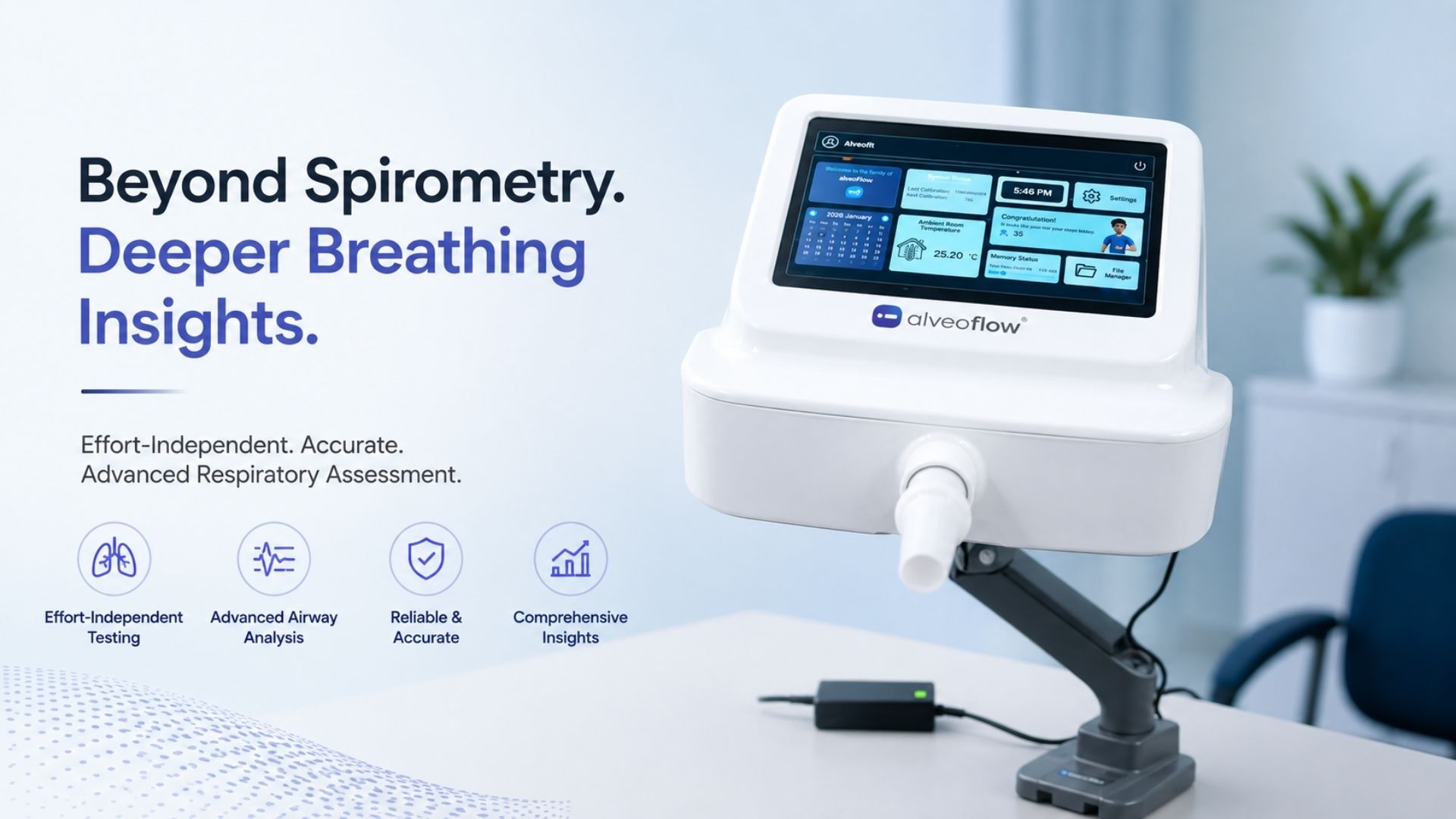
Technologies like the FOT testing device in India are helping make this transition more practical for modern clinics. Solutions like alveoflow by alveofit are part of this growing change. alveoflow combines oscillometry and spirometry within one integrated system. Our oscillometry platform helps clinics move toward respiratory assessment that feels more connected, patient-friendly, and clinically insightful. Consult us for more information today!