Respiratory care access in India is gradually expanding beyond large hospitals and specialised diagnostic centres. Clinics today are looking for ways to make lung assessment more accessible across semi-urban regions, outreach healthcare programs, and home-based care settings. This shift is creating a growing need for respiratory testing solutions that feel more flexible, portable, and easier to deploy across different healthcare environments.
Portable respiratory diagnostics are helping make this transition possible. But how exactly are digital clinical spirometers like alveoair helping expand respiratory care access across India? Let's understand here!
Why Respiratory Care Access Remains A Challenge In India
Respiratory diseases are rising rapidly across India. Asthma, COPD, pollution-related lung conditions, and post-infectious breathing problems are becoming increasingly common across both urban and semi-urban populations. However, access to timely respiratory testing still remains uneven across the country.
The challenge is not only about disease burden. It is also about where respiratory care is available, how easily testing can be performed, and whether patients can realistically access these services when they need them.
-
Limited Access Beyond Major Cities
Most advanced respiratory testing facilities and pulmonology centres remain concentrated in larger cities such as Delhi, Mumbai, Bengaluru, and Chennai. Smaller towns and semi-urban regions often have limited access to specialised respiratory diagnostics. This means many patients still travel long distances simply to perform basic lung function testing. Delays during this stage can affect:
- Early diagnosis
- Treatment adjustments
- Regular respiratory follow-up
Travel itself can also become physically exhausting for patients already experiencing breathlessness or chronic respiratory symptoms.
-
Dependence On Large Diagnostic Infrastructure
Traditional respiratory testing systems are often designed around fixed clinical setups. Many conventional spirometry systems require dedicated diagnostic rooms, larger equipment setups, and trained operational support.
Smaller clinics, outreach programs, and semi-urban healthcare centres may not always have the infrastructure needed for these systems. This reduces how consistently respiratory assessment can reach patients outside larger hospitals.
-
Delayed Testing Often Delays Care
Respiratory symptoms are frequently ignored during the early stages because access to testing does not always feel immediate or convenient. Many patients postpone lung assessment until symptoms become more severe. This delay becomes especially risky in conditions such as:
- Asthma
- COPD
- Chronic bronchitis
- Post-viral respiratory recovery
Earlier respiratory assessment often leads to earlier intervention. Unfortunately, accessibility barriers continue slowing this process in many parts of India.
-
Growing Need For Flexible Respiratory Testing
Modern respiratory care now requires testing methods that can move more easily across different healthcare environments. Clinics increasingly need respiratory solutions that support:
- Semi-urban respiratory assessment
- Outreach healthcare programs
- Flexible clinic workflows
- Home healthcare monitoring
- Easier patient access
This growing shift is one of the biggest reasons the digital spirometer is becoming increasingly important across respiratory care in India.
How Portable Digital Spirometry Is Changing Respiratory Care?
Portable respiratory diagnostics are helping reshape how lung assessment is delivered across India. Respiratory testing is no longer fixed in hospital environments. Instead, clinics can now perform assessments across more flexible care settings.
A modern digital clinical spirometer supports this shift in several important ways:
- Easier deployment in outreach clinics and health camps
- Faster respiratory screening in semi-urban locations
- More flexible testing across OPD rooms and consultation spaces
- Better support for home healthcare and follow-up monitoring
- Reduced dependency on large diagnostic infrastructure
This flexibility is one of the biggest reasons portable respiratory assessment is growing steadily across India. A connected digital spirometer can now support respiratory evaluation in places where traditional pulmonary testing was previously difficult to conduct consistently.
Home healthcare is also becoming a major driver behind this shift. Many elderly patients and chronic respiratory patients now require more convenient monitoring options closer to home. A portable digital spirometer helps make this possible by supporting respiratory assessment beyond fixed diagnostic centres.
The expansion of digital healthcare has expanded the role of the digital spirometer further. It is evolving today from a standalone testing device into a more connected respiratory care tool.
How alveoair Supports This Shift In Respiratory Care?
Expanding respiratory care access in India requires more than accurate testing alone. Clinics today need respiratory solutions that can move more easily across different healthcare environments. They also need systems that reduce infrastructure dependency while supporting faster and more connected respiratory assessment.
This is exactly where the alveoair digital clinical spirometer supports modern respiratory care differently.
Built For Flexible Respiratory Care Settings
Many respiratory testing systems still depend heavily on fixed clinical infrastructure. Smaller clinics, outreach programs, and semi-urban healthcare centres may not always have the space required for larger respiratory setups.
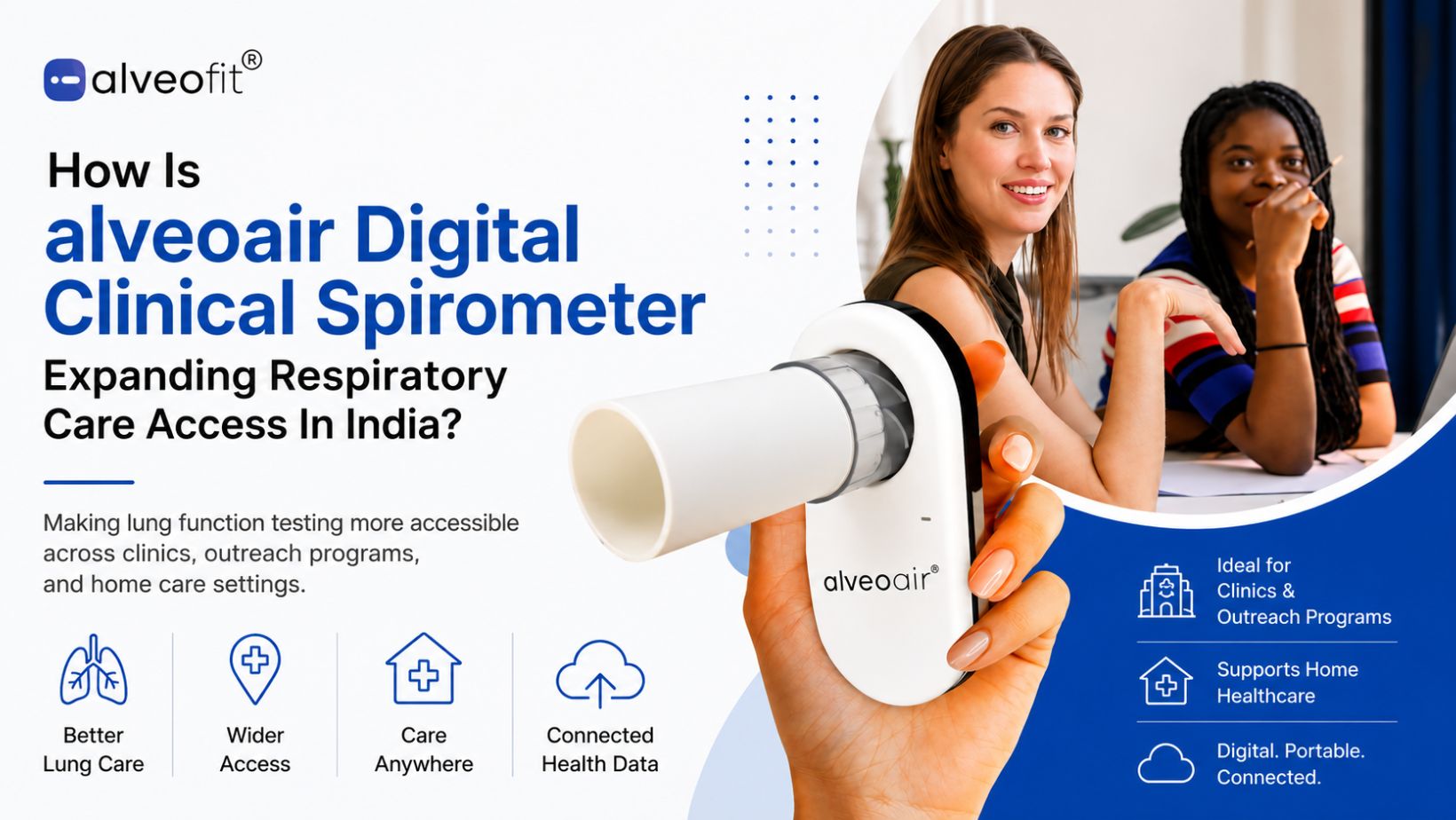
The alveoair digital clinical spirometer is designed to work more flexibly across these environments. Its compact and portable design allows respiratory assessment to move more easily between:
- Consultation rooms
- Outreach clinics
- Community health programs
- Semi-urban healthcare centres
- Home healthcare settings
This flexibility helps clinics bring respiratory testing closer to where patients already are.
-
Supporting Outreach And Semi-Urban Respiratory Access
Respiratory assessment often becomes difficult outside larger cities because testing infrastructure is not always easily available. Outreach healthcare programs and semi-urban clinics often need respiratory systems that can be deployed quickly and moved easily between care settings. Large diagnostic setups are not always practical in these environments, especially where space, infrastructure, and mobility remain limited.
The alveoair digital clinical spirometer supports this transition through portability and simplified deployment. alveoair allows clinics to perform respiratory testing more easily across mobile healthcare environments without creating complex workflow disruptions. This becomes especially valuable in regions where early respiratory screening and follow-up access still remain limited.
-
Connected Respiratory Care Beyond Basic Testing
Modern respiratory care now depends heavily on continuity and data accessibility. Lung assessment is no longer limited to one single test performed during a single visit.
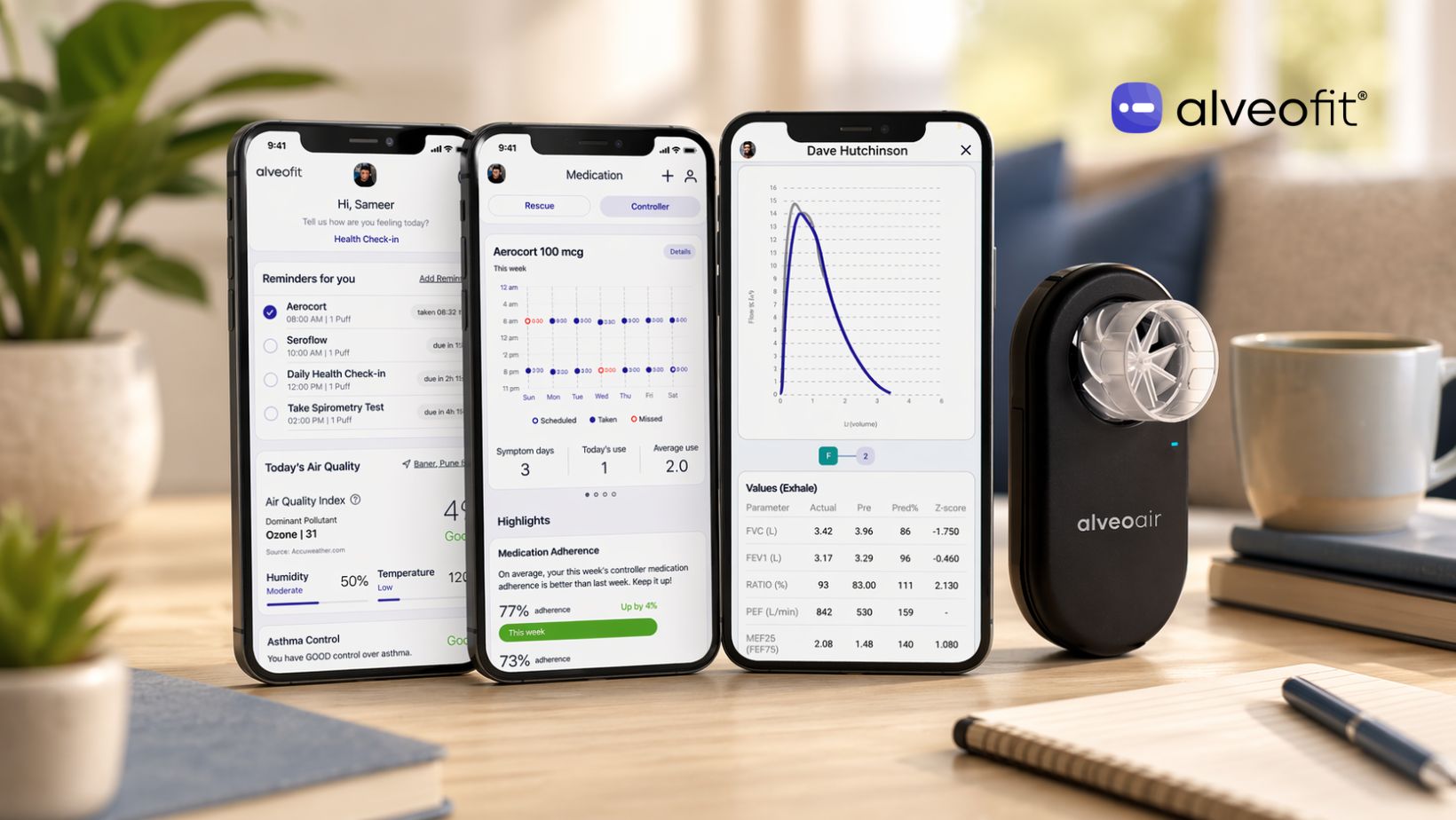
The alveoair digital clinical spirometer supports connected respiratory workflows through the broader alveofit ecosystem. Integrated digital reporting, cloud-based access, and alveoMD connectivity help clinics track respiratory data more efficiently across time. This allows clinicians to:
- Review respiratory trends more easily
- Access patient records faster
- Support long-term respiratory monitoring
- Improve continuity during follow-up care
Connected workflows of alveoair also help reduce delays caused by fragmented respiratory records and disconnected reporting systems.
-
Making Respiratory Testing More Practical For Daily Care
Respiratory testing should not feel difficult to integrate into routine clinical care. Patient comfort, testing simplicity, and workflow flexibility all play an important role in improving adoption.
The alveoair digital clinical spirometer supports respiratory assessment that feels more approachable across different patient groups and healthcare settings. This allows clinics to expand respiratory evaluation more consistently without creating unnecessary operational complexity.
As respiratory care continues evolving across India, the role of the alveoair digital clinical spirometer continues expanding alongside it.
Conclusion
Digital spirometers like alveoair are helping expand respiratory care access across India. They are doing so by making lung assessment more flexible, portable, and easier to deploy beyond traditional hospital environments. Digital clinical spirometers have empowered clinics to perform respiratory testing more efficiently across outreach programs, semi-urban healthcare settings, and even home-based care environments.
The alveoair digital clinical spirometer supports this shift by reducing dependence on large diagnostic infrastructure while supporting connected respiratory workflows and patient-friendly assessment. As respiratory care continues evolving across India, solutions like alveoair are helping bring respiratory diagnostics closer to where patients actually need them most.