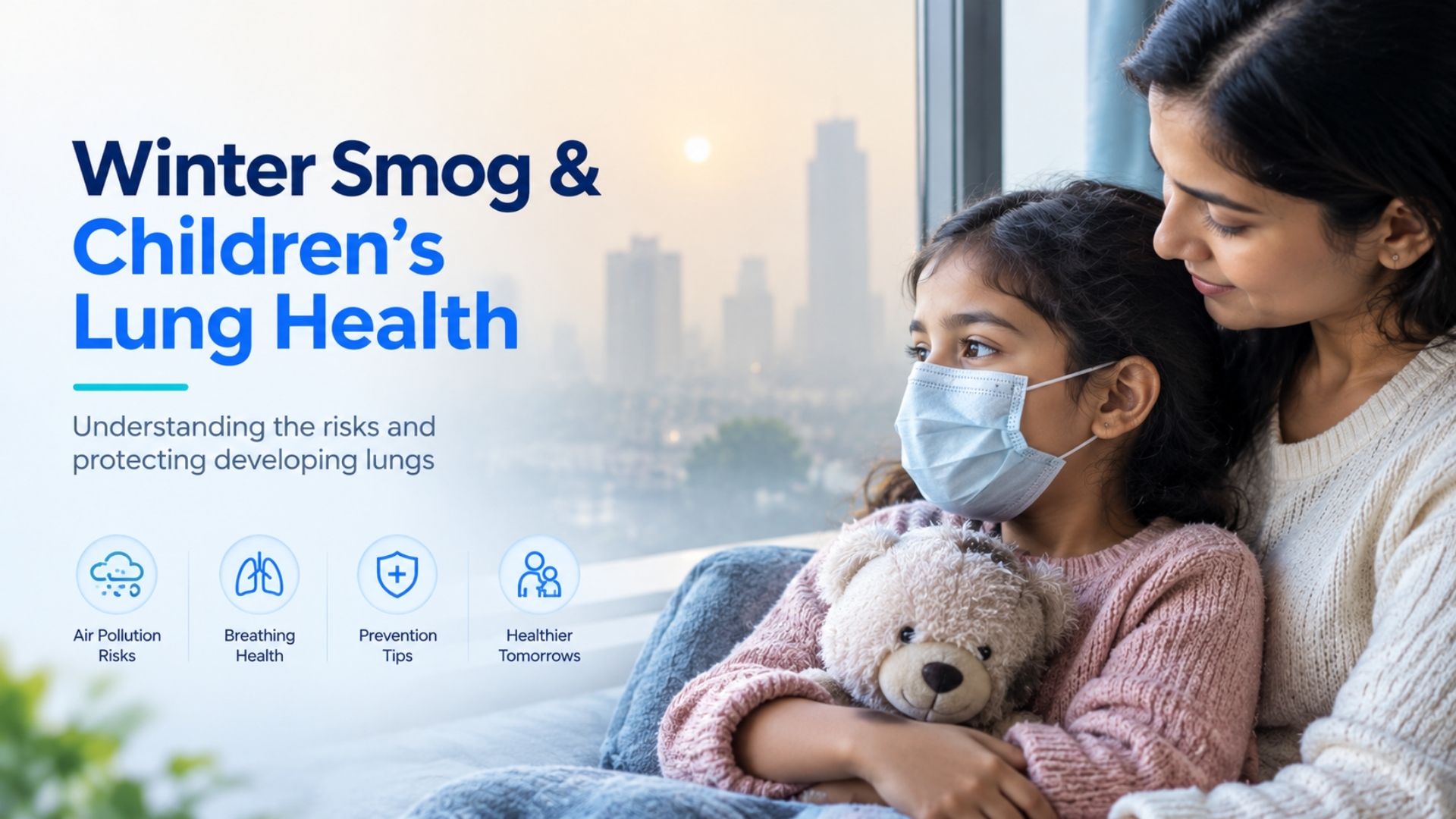
Does your child's cough seem to return every winter, especially when the air quality in North India takes a turn for the worse? Winter smog is more than an inconvenience. Repeated exposure to polluted air can affect children's respiratory health, making it important for parents to understand the risks and recognise when a child may need medical attention.
But how much do we know about the effects on children's lungs, and what can parents do to protect them? Let's look at the research, practical ways to reduce exposure, and how doctors can assess children's lung function using tools like a pulmonary function test machine.
What Research Tells Us About Children's Respiratory Health During North India's Winter Pollution
Research from Delhi and across the Indo-Gangetic Plain shows that winter air pollution is associated with a greater respiratory health burden. Various studies have reported
- More emergency visits among children on highly polluted days,
- A higher frequency of respiratory symptoms among adolescents in Delhi
- Increased pollution concentrations during the winter months.
These findings highlight why children's respiratory health needs particular attention during this period. Here are three studies that explain this exact concern:
Study 1: Higher Pollution Levels and Emergency Visits Among Children in Delhi
A study published in 2021 in Environmental Science and Pollution Research investigated the association between ambient air pollution and emergency visits for acute respiratory symptoms among children in Delhi.
The researchers screened 132,029 children aged 15 years or younger across two hospitals over 21 months. Of these, 19,120 children with acute respiratory symptoms met the study's eligibility criteria.
The findings showed that emergency visits were 29% higher on high-pollution days and 21% higher on moderately polluted days than on low-pollution days.
These results suggest that hospitals may see a greater burden of acute respiratory symptoms among children during periods of elevated pollution. The findings demonstrate an association, rather than proving that pollution caused every individual visit.
Study 2: Respiratory Symptoms and Lung Function Among Adolescents in Delhi
Research published in Environmental Science and Pollution Research also examined respiratory symptoms and asthma among adolescents living in Delhi, Kottayam and Mysore.
The researchers invited 4,361 adolescents aged 13–14 and 16–17 years to participate. A total of 3,157 completed questionnaires and good-quality spirometry.
Among adolescents in Delhi, 50.9% reported coughing during the preceding three months, compared with 35.4% of participants from Kottayam and Mysore combined. Shortness of breath and chest tightness were also reported more frequently among adolescents in Delhi.
The study additionally reported questionnaire-based asthma prevalence of 21.7% and spirometry-defined airflow obstruction in 29.4% of Delhi participants. These figures relate to the study population and the definitions used by the researchers. They should not be interpreted as prevalence estimates for every child in Delhi.
The findings are important because the researchers examined both reported symptoms and measured lung function. This distinction helps explain why understanding a child's respiratory health requires more than looking at symptoms alone.
Study 3: Seasonal Air Pollution Across the Indo-Gangetic Plain
A three-year study published in Environmental Science and Pollution Research examined the seasonal variation in PM2.5 and nitrogen dioxide across the Indo-Gangetic Plain between 2019 and 2021.
The researchers found that concentrations of both pollutants, along with estimated health risks, were highest during the post-monsoon and winter periods. Delhi and the middle Indo-Gangetic Plain recorded higher concentrations and estimated risks than the upper and lower regions.
These findings provide regional context for the respiratory health concerns reported in the Delhi studies. They show that the winter months coincide with higher concentrations of important air pollutants across parts of North India. However, the study's estimated health risks should not be confused with direct measurements of lung function decline in individual children.
What Do These Studies Tell Us?
Taken together, the studies present three connected findings:
- Higher pollution levels were associated with more emergency visits for acute respiratory symptoms among children in Delhi.
- Adolescents in Delhi reported respiratory symptoms more frequently than participants in the comparison cities.
- Regional research also found higher pollution concentrations and estimated health risks during the post-monsoon and winter periods.
These findings do not mean every child exposed to winter smog will develop a respiratory condition. They do, however, highlight the importance of recognising breathing problems and investigating them appropriately.
Why Is Winter Smog a Particular Concern for Children's Lungs?
Winter smog poses a particular concern for children because their lungs are still developing, and breathing polluted air can irritate their airways and worsen existing respiratory conditions. Repeated exposure also raises concerns about their long-term respiratory health.
But what exactly makes children more vulnerable, and how does winter pollution affect their lungs? Let's look at three key reasons:
1. Children's Developing Lungs Need Protection
Children's lungs and airways continue to develop throughout childhood. Exposure to polluted air during these years can interfere with healthy respiratory development and increase the risk of respiratory problems. This is exactly why it is crucial to reduce children's exposure to polluted air.
2. Fine Particles Can Reach Deep Into the Respiratory System
Winter smog contains fine particulate matter, including PM2.5. These particles are small enough to travel deep into the lungs when inhaled, where they can trigger inflammation and irritate the airways. This can aggravate coughing, wheezing and breathing difficulties, particularly in children with existing respiratory conditions such as asthma.
3. Repeated Exposure Can Add to Respiratory Health Risks
Children who breathe polluted air repeatedly may experience ongoing respiratory irritation and a greater risk of adverse respiratory outcomes. The WHO identifies air pollution as a risk to children's respiratory health, while studies from Delhi have documented an association between higher pollution levels and increased emergency visits for acute respiratory symptoms.
These risks do not mean every child exposed to winter smog will develop a respiratory condition. They do, however, explain why persistent symptoms deserve attention and why doctors may need to assess lung function rather than rely on symptoms alone.
How Can Parents Protect Children During North India's Winter Smog?
Parents cannot control outdoor pollution, but a few practical steps can help reduce children's exposure during North India's winter smog.
1. Limit Outdoor Activities When Pollution Levels Are High
Check local air quality readings before planning outdoor play or sports. Move activities indoors on heavily polluted days. Remember to follow local health advisories, specially for children with asthma or other respiratory conditions.
2. Keep Indoor Air as Clean as Possible
Keep windows and doors closed during severe pollution episodes when practical. An appropriately sized air purifier with a HEPA filter can also help reduce airborne particles indoors. Avoid indoor smoking, and use kitchen exhaust systems to remove cooking fumes.
3. Watch for Persistent Respiratory Symptoms
Do not dismiss a child's persistent cough, wheezing, or breathlessness as just another winter problem. If symptoms continue or worsen, consult a doctor. Children experiencing severe breathing difficulty need urgent medical attention.
4. Seek Medical Advice When Breathing Problems Persist
If your child keeps experiencing respiratory symptoms, a doctor can assess their condition and decide whether lung function testing is appropriate. A pulmonary function test machine can help clinicians measure aspects of how well the lungs work. The choice of test depends on the child's age, symptoms, and ability to follow the required breathing instructions.
Reducing exposure is important, but recognising when a child needs further assessment matters just as much.
From Home Monitoring to Lung Function Testing: When Should Parents Seek Help?
Not every cough during winter smog needs a doctor's consultation. What matters is how long the symptoms last, whether they keep returning, and whether they affect your child's usual activities. Paying attention to these changes can help you recognise when your child may need medical attention.
What Should Parents Watch for at Home?
Look beyond the cough itself. Notice whether your child experiences:
- Persistent coughing or wheezing: Symptoms that continue or keep returning, particularly during periods of poor air quality.
- Breathlessness during play: Your child becomes unusually short of breath during activities they previously managed comfortably.
- Reduced energy levels: Your child tires more easily or starts avoiding physical activities.
- Recurring chest discomfort: Your child repeatedly complains of chest tightness or discomfort while breathing.
These observations can help you explain what has changed when speaking to a doctor. However, symptoms alone cannot tell you exactly how well your child's lungs are working.
Why Can Assessing a Child's Breathing Be Challenging?
Children may find it difficult to describe breathlessness or explain how their breathing feels. Even when they have noticeable symptoms, they may not understand the instructions required for certain lung function tests.
Spirometry, for example, requires a child to take a deep breath and blow out forcefully as instructed. Some younger children struggle to repeat this manoeuvre consistently, which can affect the quality of their results.
How Can Doctors Assess a Child's Lung Function?
A pulmonologist can review your child's symptoms, medical history, and breathing before deciding whether further testing is needed. Depending on the clinical findings, a pulmonary function test machine may be used to measure aspects of lung function and provide information that symptoms alone cannot offer.
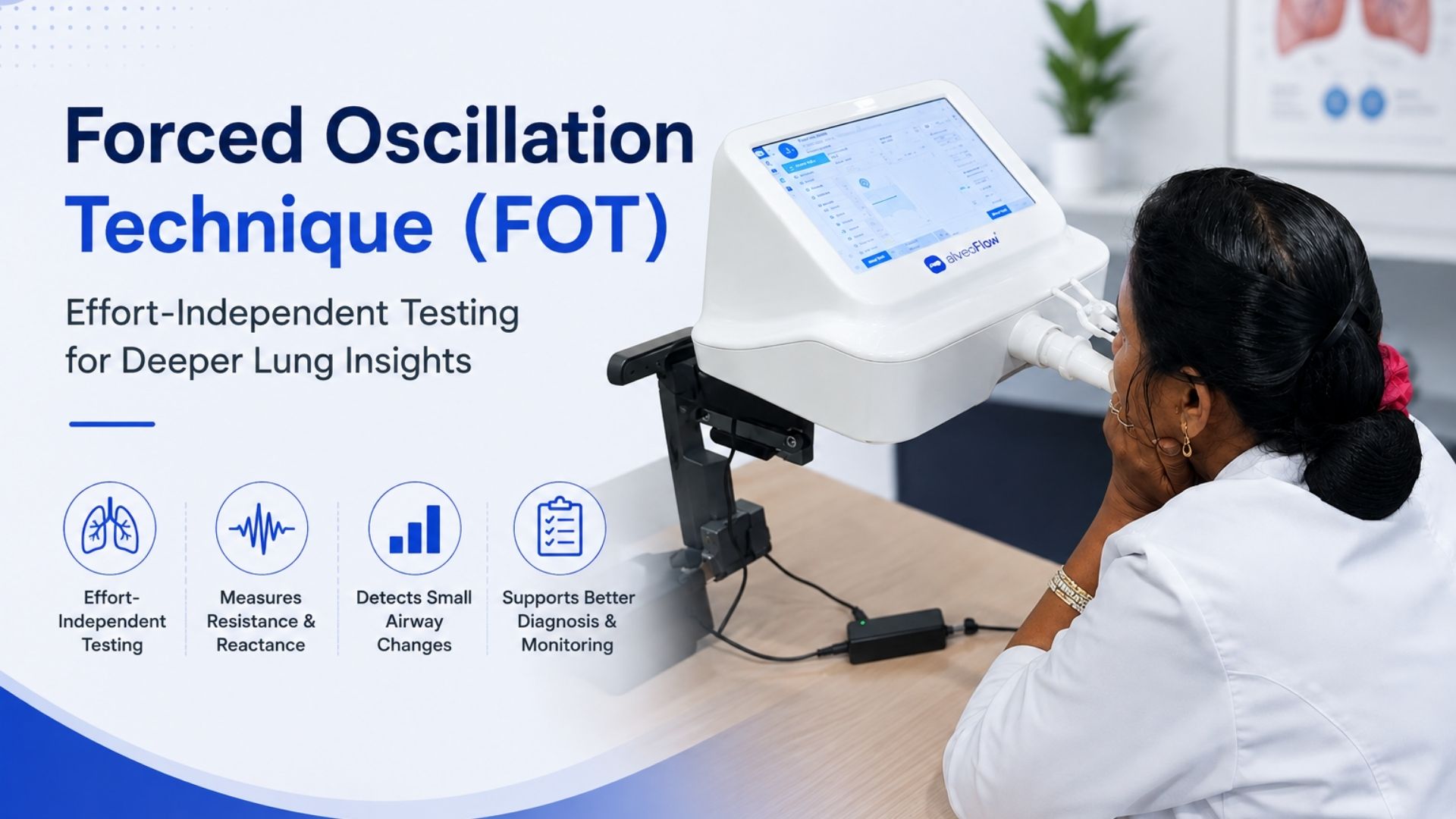
Spirometry is one established option, but it may not be suitable for every child in every situation. Other approaches, including the forced oscillometry technique (FOT), allow doctors to assess respiratory mechanics while a child breathes quietly. The choice between a spirometer and a pulmonary function test machine depends on the child's age, ability to perform the test, and the clinical question.
Seek urgent medical attention if your child has severe breathing difficulty, bluish lips, or noticeable pulling in of the chest while breathing.
Where Does the alveoflow FOT System Fit Into Paediatric Respiratory Assessment?
Choosing the right lung function test depends on what the doctor needs to assess and how well a child can perform the test. A pulmonary function test machine can help clinicians obtain objective measurements, but different testing methods provide different information.
How Does the alveoflow FOT System Work?
The alveoflow FOT System combines oscillometry and spirometry in one device. Its oscillometry function uses the forced oscillometry technique to assess respiratory mechanics while the patient breathes quietly. The test with our pulmonary function test machine typically takes around 15–30 seconds.
Why Is alveoflow FOT Better When Testing Children?
Some children find it difficult to perform the forceful breathing manoeuvres required for spirometry. The forced oscillometry technique offers another way to assess respiratory mechanics without requiring the same forceful exhalation.
This makes the alveoflow FOT System a potential option when clinicians need additional information about a child's breathing. The combined testing capabilities of the pulmonary function test machine also allow clinicians to consider oscillometry and spirometry according to the child's needs and the clinical question.
FAQs
Can winter smog affect a child's lungs even if they do not have asthma?
Yes, air pollution can irritate the airways of children without asthma and increase their risk of respiratory symptoms. Existing asthma can make children more vulnerable, but it is not the only reason to take a recurring cough or breathing difficulties seriously.
Can winter air pollution affect children's lung development?
Children's lungs continue to develop throughout childhood, and long-term exposure to air pollution has been linked to adverse respiratory health outcomes. The effect on an individual child depends on several factors, including the level and duration of exposure.
Can FOT testing help assess lung function in young children who struggle with spirometry?
Yes, the forced oscillometry technique (FOT) assesses respiratory mechanics while a child breathes quietly, making it a useful option when forceful breathing tests are difficult. A doctor can decide whether FOT, spirometry, or another assessment is appropriate for the child's age and clinical needs.