Spirometry is an important part of lung-function testing. But what happens when your patient cannot perform it reliably?
You may be seeing a young child who is struggling with the breathing technique. You may have an older person as a patient who may find the required effort difficult. The results from their test may not offer you the needed information even after multiple attempts. Does this mean you cannot test their lung function at all?
That’s exactly the kind of situation in which doctors use Impulse Oscillometry for lung function testing. But why can impulse oscillometry be useful when spirometry is difficult? What makes the two tests different, and how can an oscillometry machine for pulmonologists support respiratory assessment? That’s exactly what we cover in this article.
Why Can Spirometry Be Difficult for Some Patients?
Spirometry can be difficult for patients who cannot follow the breathing instructions or perform the required breathing technique correctly. That’s because the spirometry test depends on the patient taking a deep breath and then breathing out as instructed. However, that process can be difficult for some patients and can affect the quality of the results.
Here are several patient-related factors that can make this difficult:
- Young children may struggle with the technique: They may understand what they are being asked to do but still find it difficult to take a deep breath and breathe out forcefully for long enough.
- Older adults may find forceful breathing difficult: Physical limitations, reduced strength, or difficulty sustaining the required effort can affect how well they perform the test.
- Some patients may struggle to coordinate the steps: The test requires patients to seal their lips around the mouthpiece, take a deep breath, and immediately begin a strong and sustained exhalation.
- Inconsistent performance can affect the readings: If a patient cannot repeat the breathing test correctly, the results may not provide a reliable picture of their lung function.
This does not make spirometry a poor way to test lung function. It simply means that the patient needs to be able to perform the breathing test correctly for the results to be useful.
What Is Impulse Oscillometry?
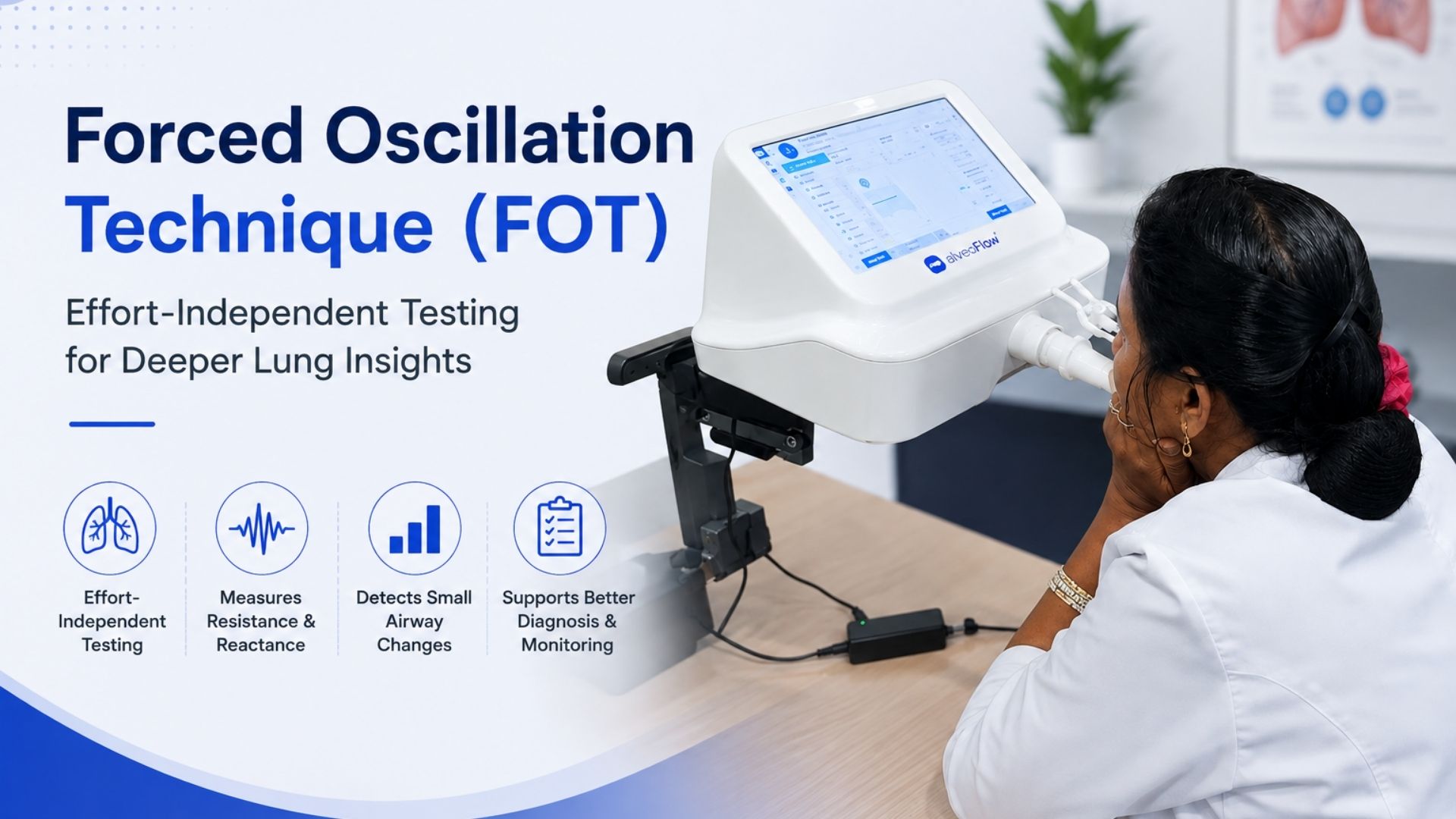
Impulse oscillometry is a lung-function testing method that can assess the respiratory system while a patient breathes normally. This makes it useful when a patient finds the forced breathing required for spirometry difficult.
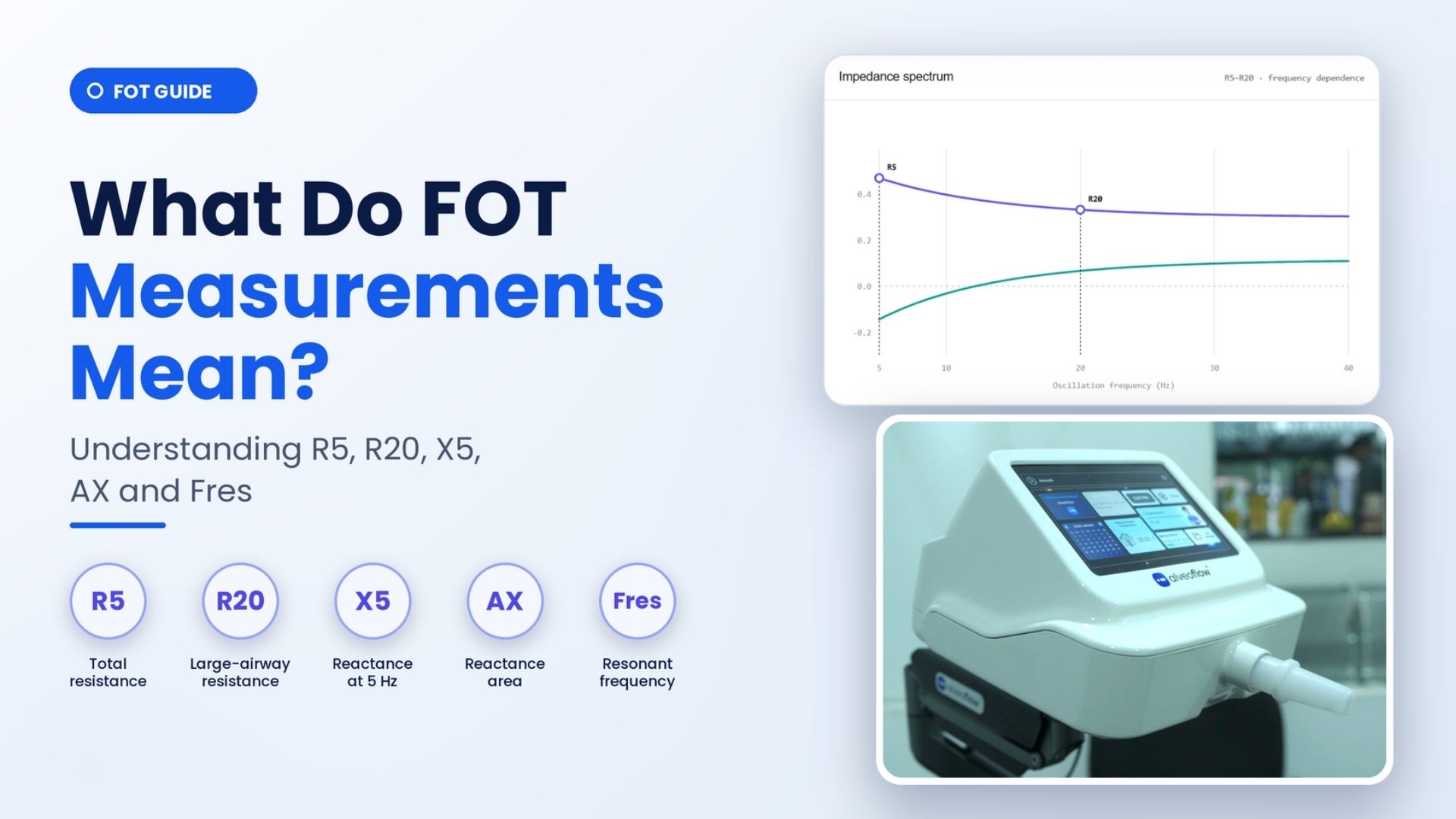
During Impulse oscillometry, the patient breathes through a mouthpiece while the device sends small pressure waves into the airways. It measures how the respiratory system responds to these waves and uses the results to assess respiratory resistance and reactance.
These measurements can tell the clinician more about how easily air moves through the respiratory system and how the lungs and airways respond during breathing:
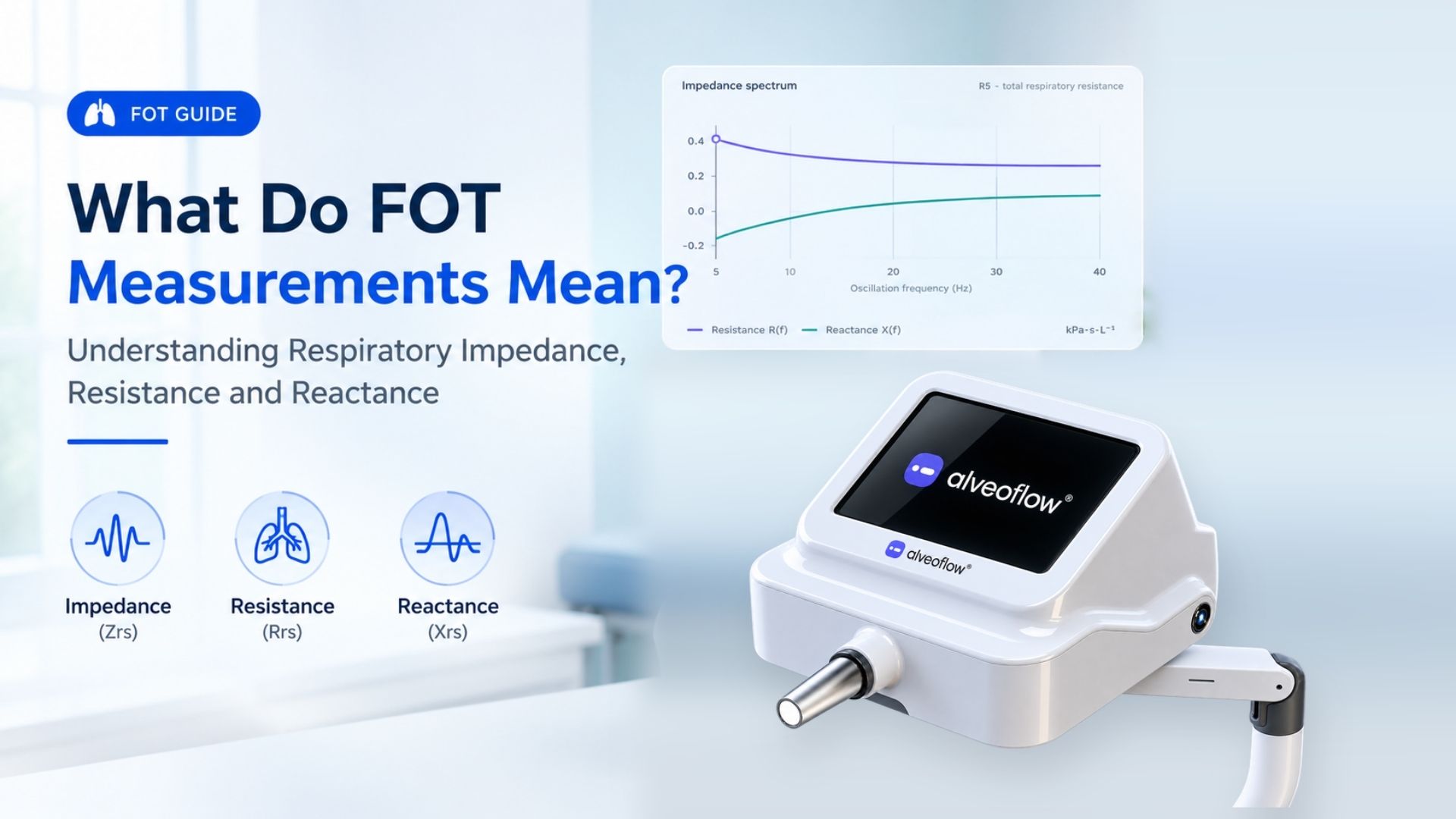
- Resistance shows how much the respiratory system opposes the movement of air. Higher resistance can indicate greater difficulty with airflow.
- Reactance provides information about how the respiratory system responds to the pressure waves, including the effects of the lungs and airways beyond simple airflow resistance.
- Impedance combines these responses to describe the overall mechanical behaviour of the respiratory system.
The key difference between Impulse oscillometry and spirometry is how the test is performed. Spirometry requires the patient to follow instructions and breathe out as forcefully as possible. Impulse oscillometry can collect its measurements while the patient continues to breathe normally. That makes impulse oscillometry useful when a patient cannot put it right efforts or experiences difficulty following the breathing instructions needed during spirometry.
Why Is Impulse Oscillometry Useful When Spirometry Is Difficult?
Impulse oscillometry is useful because it can assess respiratory function while the patient breathes normally. This means the test does not depend on the same level of forced breathing and coordination required for spirometry.
That difference can be useful when a patient cannot produce reliable spirometry results. Doctors do not have to ask the patient to repeat a difficult breathing technique when using an oscillometry machine. Instead, the pulmonologist can use oscillometry to obtain measurements of respiratory resistance and reactance during normal breathing.
This can make a difference in a few clinical situations:
-
When reliable spirometry cannot be obtained:
A patient may struggle with the breathing technique even after repeated attempts. Impulse Oscillometry for lung function testing can provide a different way to assess respiratory function without relying on the same forced breathing effort.
-
When the clinician needs more information:
Spirometry and oscillometry measure respiratory function in different ways. Spirometry focuses on airflow during forced breathing, while oscillometry provides information about respiratory resistance and reactance during normal breathing. This can give the pulmonologist another view of respiratory function, especially when spirometry alone does not provide a complete picture.
-
When testing needs to be repeated:
Respiratory symptoms can change over time, so one test may not show the full picture. That’s where Impulse Oscillometry for lung function testing proves beneficial. It can help a pulmonologist see whether respiratory measurements have remained stable or changed since an earlier assessment. These changes can then be considered alongside the patient's symptoms, examination findings, and treatment response.
This does not make impulse oscillometry a replacement for spirometry. Spirometry remains an important test when a patient can perform it reliably. The value of oscillometry is that it gives the pulmonologist another way to assess respiratory function when spirometry is difficult or does not provide enough information.
How Does Impulse Oscillometry Compare With Spirometry?
Spirometry and impulse oscillometry both assess lung function, but they do it in different ways. Spirometry measures airflow during forced breathing, while impulse oscillometry measures respiratory mechanics while the patient breathes normally. This difference affects which patients can perform each test and what information the pulmonologist receives.
The table below shows how the two tests compare:
| Feature | Spirometry | Impulse Oscillometry |
| How the test is performed | The patient takes a deep breath and then breathes out as instructed and with force. | The patient breathes normally through a mouthpiece while the device applies small pressure oscillations. |
| Patient effort | Requires active effort and good understanding of the breathing instructions. | Requires much less active effort because the patient can continue normal breathing. |
| Main measurements | FEV1, FVC and FEV1/FVC | Respiratory resistance, reactance and impedance |
| What it tells the clinician | Shows how air moves during forced expiration. | Provides information about how the respiratory system responds to airflow during normal breathing. |
| When testing can be difficult | Results can be affected when a patient cannot perform the required breathing technique correctly. | Can be useful when a patient has difficulty performing reliable forced breathing. |
| Patient groups that may benefit | Well suited to patients who can understand and perform the required breathing technique. | Can be useful for patients who find forced breathing difficult, including some young children and other patients who cannot produce reliable spirometry. |
| Use in follow-up | Repeat results can be compared to assess changes in airflow over time. | Repeat measurements can be compared to assess changes in respiratory mechanics over time. |
| Relationship between the tests | Provides important information about forced expiratory airflow. | Provides different information about respiratory mechanics and can complement spirometry. |
This difference does not make one test better than the other. Spirometry remains an important lung-function test because it provides established measurements of airflow and is widely used in respiratory assessment.
Impulse oscillometry answers a different clinical need. It can provide information about respiratory mechanics without asking the patient to perform the same forced breathing required for spirometry. This can be useful when reliable spirometry is difficult to obtain or when the pulmonologist needs additional information.
The choice, therefore, depends on the patient and the clinical question. A pulmonologist may use spirometry, impulse oscillometry, or both when assessing respiratory function.
Conclusion
Spirometry remains an important part of lung-function assessment, but it is not always easy for every patient to perform correctly. Young children, older adults, and patients who struggle with the breathing technique may not produce reliable results. That does not mean clinicians have to stop assessing lung function.
Impulse oscillometry offers another approach when forced breathing becomes difficult. It measures respiratory mechanics while the patient breathes normally, giving pulmonologists information that can complement spirometry. But note that the goal of using Impulse Oscillometry for lung function testing is not to replace one test with another. It is to give clinicians more options when assessing different patients and clinical needs.
That is what we aim to deliver at alveofit. Our alveoflow Oscillometry machine for pulmonologists is designed to make effort-independent respiratory testing more accessible in clinical practice.
We believe better respiratory assessment starts with having the right information, in the right way, for the patient being assessed. Know more about our product or contact us at alveofit today!